
Wood-Burning Stove Repair & Install
Wood stove repair and installation across Leominster and Worcester County. We diagnose the problem before we quote the work.

A wood stove is the only heat source in the house that you load, light and live beside. When it stops drawing properly, burns wood faster than it used to, or lets smoke into the room, it is worth finding out why. On Duty services and installs wood-burning stoves throughout Leominster, Fitchburg, Lunenburg, Ashburnham and the surrounding Worcester County towns.
Most wood stove problems trace back to the stove itself, the chimney it vents into, or how the system is fueled. Those three look identical from the living room and are not the same repair, which is why every visit starts with a diagnostic rather than a quote. Owner Bryan LeBlanc is a retired firefighter, and the habit of checking the whole system rather than the one obviously broken part comes from that background. On Duty has served Central Massachusetts since 2010.
Wood Stove Repair Diagnostic Includes:
What You Get From On Duty Chimney, Masonry, Stove:
- An in-home visit at a scheduled window, not an open-ended wait
- Assessment of the stove, the flue connection and the chimney together
- A plain-language explanation of what is failing and why
- Photo documentation of anything we ask you to pay to fix
- Repair and replacement options side by side, with no work started until you approve
Key Indicators Your Wood-Burning Stove Requires Repair or Replacement by On Duty Chimney, Masonry, Stove
Wood stoves rarely fail without warning. Catching the signals below in autumn means a scheduled repair. Catching them in January means a cold house while you wait for a part.
Warping
Bowing, rippling or a seam pulling apart means the stove has been run hotter than it was built for, usually from burning unseasoned wood with the air wide open. Warping is not cosmetic. It breaks the seal the firebox depends on and makes the burn impossible to control. This is generally where replacement becomes the sensible option.
Rusting
Surface rust means moisture is reaching the stove, and in Central Massachusetts that almost always points at the chimney rather than the appliance. A missing cap, a cracked crown or a failed liner will let rain down onto the stove all summer. Cleaning up rust without fixing the source buys one season, so we trace the water first.
General Corrosion
Corrosion that has started pitting or perforating the metal is different from rust you can wire brush off. Once it reaches the firebox or the flue collar, the stove can no longer be relied on to contain combustion gases and carbon monoxide becomes a real risk. If you can see light through the firebox, stop using it and call us.
Broken Catalytic Combustor
On a catalytic stove the combustor is a consumable, good for roughly six to ten heating seasons. A failing one shows up as harder lighting, a stove that will not hold a long low burn, more visible smoke and higher wood use. Replacing it restores efficiency if the part is still made.
Stubborn or Broken Door
The door should close with firm, even resistance. If you can slide a dollar bill out from under the closed gasket without tension, the seal is gone. A leaking door lets uncontrolled air into the firebox, which burns hot and fast, wastes wood and drives creosote up the flue. Gaskets, glass and latches are among our most common repairs.
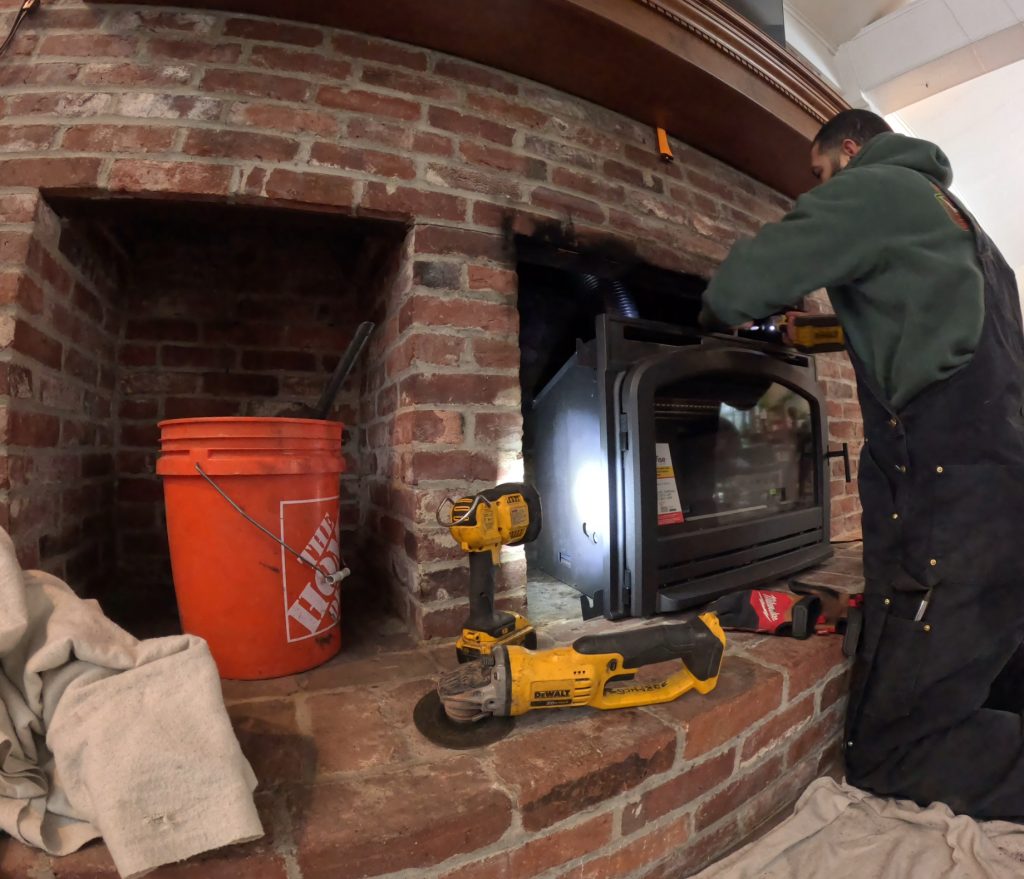
Repair It or Replace It: How to Decide Before Heating Season
The answer turns on the age of the stove, what specifically failed, and whether the stove is EPA certified. A twelve year old certified stove with cracked glass and a tired gasket is a repair. A thirty year old uncertified stove with a warped firebox is usually a replacement, because you can spend real money on it and still burn more wood for the same heat.
| What you are seeing | Usually a repair | Usually a replacement |
|---|---|---|
| Door glass, gaskets, handles, firebrick | Yes, these are wear parts | No |
| Worn baffle or catalytic combustor | Yes, if parts still exist for the model | If parts are discontinued |
| Warping in the firebox or top plate | No | Yes, the steel has been overfired |
| Rust that has eaten through the metal | No | Yes, the firebox no longer seals |
| Uncertified stove over roughly 25 years old | Rarely worth it | Yes, on efficiency and clearances |
A replacement, where an existing stove and venting system are already in place, typically runs $4,000 to $8,000, depending on the stove and any necessary venting upgrades. A new freestanding installation typically runs $10,000 to $15,000, depending on the stove selected and the home’s requirements, and generally includes the stove, an insulated Class A chimney system and all necessary installation materials. Qualifying stove models may also be eligible for a federal tax credit, which can help offset a portion of the overall cost.
What a Wood Stove Installation Actually Involves in Massachusetts
Homeowners tend to price a wood stove by looking at the stove, but the appliance is usually less than half the project. A wood stove installation in Massachusetts is a permitted job that requires an inspection, and On Duty handles the permitting rather than leaving it with you. A complete install generally includes:
- Sizing the stove to the space, because an oversized stove gets run smoldering and builds creosote
- Clearances to combustibles, or approved shielding where they cannot be met
- A hearth pad rated for the stove and sized to the manufacturer specification
- A correctly sized stainless liner, or a new insulated chimney where there is no usable flue
- Municipal permitting and the final inspection sign off
- A walkthrough on operation, fuel and the first burn
We will not install a stove that does not meet current EPA standards, and we will not install into a chimney we have not evaluated. If the existing flue is oversized, unlined or in poor condition, that has to be corrected first. It is the most common reason a simple-looking installation turns into a larger project.
Expert Wood-Burning Stove Services You Can Trust Near Leominster Area, MA
On Duty has worked on chimneys, masonry and stoves in Central Massachusetts since 2010. We are licensed in the Commonwealth under Construction Supervisor License CS106348 and Home Improvement Contractor registration 201587, and our technicians carry OSHA credentials. That matters on a wood stove job, because the work touches structure, venting and combustion at once and the installation will be inspected.
We assess the stove and the chimney together, document what we find with photographs so you are looking at your own system rather than taking our word for it, and explain the options including doing nothing yet. Nothing gets done until you say so. We also carry stoves, so if the conversation moves toward replacement you are not sent elsewhere to shop. Financing is available on installations.

Getting the Stove Ready Before the Cold Arrives
There is a narrow window every year, roughly September through early November, when wood stove service here is straightforward. Parts are available and schedules are open. Once the first real cold snap arrives, the same call turns into a wait. Before the first fire of the season:
- Check the door gasket for tension and the glass for cracks
- Look over the firebox for warping, through-rust or cracked firebrick
- Confirm the chimney has been swept since the last heating season
- Check that the cap is in place and the crown is intact
- Test every smoke and carbon monoxide alarm, and replace any unit over ten years old
If anything on that list gives you pause, book it now rather than in December. Call On Duty at (978) 696-7933 or schedule your wood stove service online.
What Our Customers Are Saying
Customers here in Leominster and beyond love our chimney services! Here are a few things they have to say
Can wood-burning stoves be repaired?
Yes, and most should be. Door gaskets, glass, firebrick, baffles, handles and catalytic combustors are replaceable wear parts. The exceptions are structural: a warped firebox or through-rust cannot be meaningfully repaired. The deciding factor is whether the failure is a part or the body of the stove.
How long should a wood-burning stove last?
A quality stove that is correctly sized, properly installed and burned on seasoned wood will commonly last 10 to 20 years, and cast iron can run longer with periodic rebuilding. What shortens that most is overfiring, which usually starts with wet wood and the air control wide open to compensate.
How much does it cost to install a wood burning stove?
A new freestanding installation typically runs $10,000 to $15,000, depending on the stove selected and the home’s requirements. That generally includes the stove, an insulated Class A chimney system and all necessary installation materials. A replacement, where an existing stove and venting system are already in place, typically runs $4,000 to $8,000, depending on the stove and any necessary venting upgrades. The difference is the chimney rather than the stove: venting into a sound existing system costs far less than building a new insulated one. Qualifying stove models may be eligible for a federal tax credit.
Do I need a permit to install a wood stove in Massachusetts?
Yes. A wood stove installation in Massachusetts requires a municipal permit and a final inspection, and On Duty handles both as part of the job. This is also why an unpermitted install by a previous homeowner can cause problems at a home sale or an insurance claim.