


Your chimney inspector just delivered the news: you need a new liner. Now you’re wondering what that’s going to cost—and whether you’re getting a fair price.
It’s a valid concern. Chimney liner costs can range from $3,000 to over $8,500, depending on your chimney’s height, the liner material, and whether your existing liner needs removal first. Without understanding these variables, it’s easy to overpay—or worse, choose the wrong liner for your appliance.
This guide breaks down exactly what chimney liners cost in Central Massachusetts, which type makes sense for your situation, and what to expect during installation. We’ve installed hundreds of liners across Worcester County since 2010, so the numbers you’ll see here reflect real-world pricing—not national averages that don’t account for New England’s older housing stock and harsh winters.
The Quick Decision Framework
Before we get into pricing details, here’s a quick way to estimate where your project falls:
| Budget-Friendly ($2,000–$4,000) | Premium Investment ($4,500–$8,000) |
| Single-story chimney (15–20 ft) | Two-story or taller chimney (25–35+ ft) |
| Straight flue with no offsets | Multiple bends or offsets in flue |
| No existing liner removal needed | Damaged clay tiles must be removed first |
| Gas appliance only | Wood stove or fireplace use |
| Standard 6″ diameter liner | Larger diameter (8″+) or insulated liner |
Types of Chimney Liners and What They Cost
The material you choose is the single biggest factor in your total cost. Here’s what each type runs in today’s market:
Stainless Steel Liners
Stainless steel is what we recommend for most homeowners, and it’s what we install in about 85% of relining jobs. It’s durable, works with all fuel types, and offers the best balance of cost and longevity.
| Liner Type | Material Cost/Foot | Total Installed Cost |
| 304 Stainless (wood burning) | $20–$40 | $1,200–$4,300 |
| 316Ti Stainless (all fuels) | $30–$50 | $2,000–$5,500 |
| Double-wall insulated | $50–$90 | $2,500–$6,000 |
The 316Ti grade includes titanium for superior corrosion resistance—essential if you’re burning oil, coal, or using a high-efficiency gas appliance that produces acidic condensation. Most 316Ti liners come with a lifetime transferable warranty, which adds peace of mind when selling your home.
Clay Tile Liners
Clay tiles are what you’ll find in most chimneys built before the 1980s. While the materials are inexpensive ($6–$15 per foot), clay relining is rarely practical for existing homes because it requires opening up the chimney walls to install individual tiles.
If your existing clay liner has minor cracks but is structurally sound, a ceramic coating like HeatShield ($3,000–$4,000+) can seal the damage without full replacement. But for chimneys with extensive clay damage, stainless steel relining is almost always more cost-effective than clay replacement.
Aluminum Liners
Aluminum is the budget option at $625–$2,000 installed, but with significant limitations. It’s only approved for mid-efficiency gas appliances—never wood, pellets, oil, or high-efficiency gas units. Aluminum corrodes quickly and typically lasts just 5–10 years.
We generally don’t recommend aluminum except for specific situations where a gas water heater is the only appliance being vented and budget is the primary concern.
What Drives Chimney Liner Costs Higher
Beyond material choice, several factors can significantly impact your total cost:
Chimney Height
Liner material is priced per foot. A 35-foot chimney on a two-story Colonial costs roughly double what a 15-foot ranch chimney does in materials alone. Labor also increases because taller installations require more time and often additional equipment.
Existing Liner Removal
If your chimney has damaged clay tiles that must come out before installing a new liner, expect to add $500–$1,500 to your project. In many cases, we can leave existing clay in place and install the new stainless steel liner inside it, which saves significant labor costs.
Chimney Access and Configuration
Chimneys with multiple offsets require flexible liners and more careful installation. Difficult roof access (steep pitch, multiple levels, limited working space) also increases labor time and cost.
Insulation Requirements
Massachusetts code requires insulation for wood-burning applications in most situations. Adding insulation wrap or using a pre-insulated double-wall liner adds $575–$1,200 to the project. The insulation improves draft, keeps flue gases hotter, and reduces condensation that can damage your liner over time.
Why Central Massachusetts Chimneys Need Extra Attention
New England weather is hard on chimneys. Our freeze-thaw cycles—we can see 90+ freeze-thaw events in a typical Worcester County winter—accelerate liner deterioration faster than you’d see in milder climates.
This is especially problematic for the original clay tile liners in Central MA’s older housing stock. When moisture gets into hairline cracks and freezes, those cracks expand. Over years of heating seasons, small cracks become major gaps that allow heat and gases to reach combustible materials in your chimney structure.
We also see more high-efficiency furnace issues here than in warmer regions. These furnaces produce acidic condensation that eats through unprotected flue tiles. If you’ve upgraded to a high-efficiency heating system in the last 10–15 years, your original liner may be deteriorating faster than expected.
Signs You Need a New Chimney Liner
During our camera inspections, we look for these warning signs:
- Cracked, broken, or missing clay tile sections
- White staining (efflorescence) on chimney exterior—indicates moisture penetration
- Rust flakes or deterioration in metal liners
- Condensation or water in the firebox
- Draft problems or smoke entering the home
- Failed previous inspection
- Chimney fire history (even a small one can crack liner tiles)
If you’re using a wood stove, pellet stove, or fireplace regularly and haven’t had a camera inspection in the last 3–5 years, it’s worth scheduling one. A Level 2 inspection with a camera costs $150–$300 and gives you a clear picture of your liner’s condition before you’re facing an emergency.
What to Expect During a Chimney Liner Installation
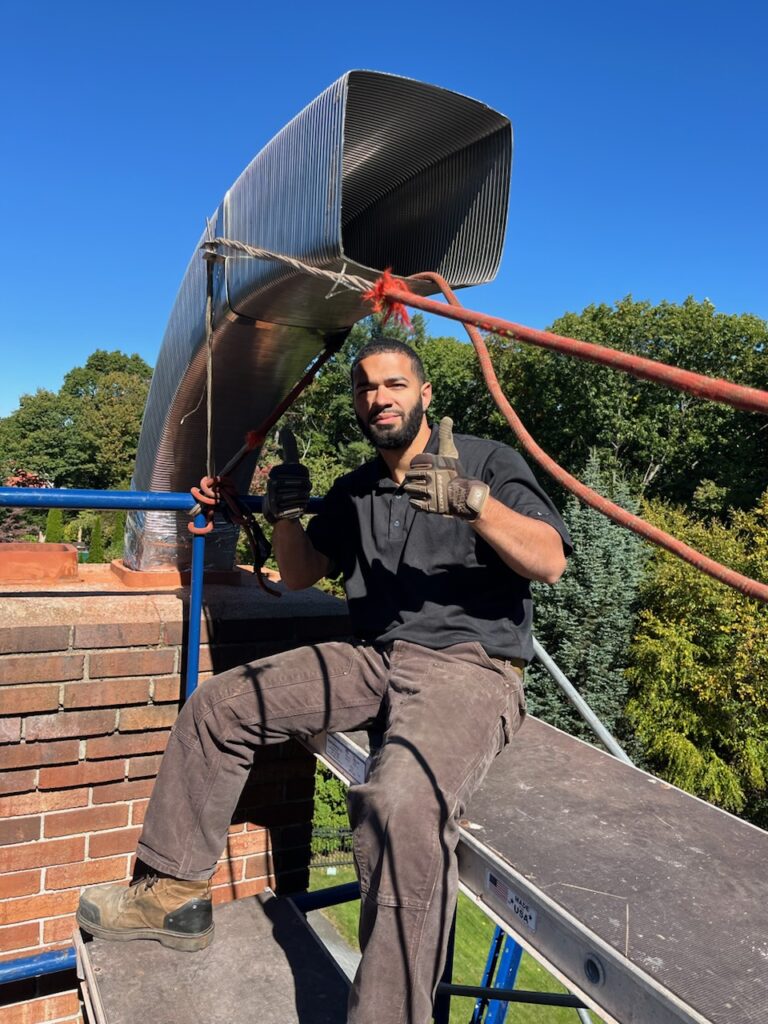
A typical stainless steel liner installation takes 4–8 hours for a single-story chimney, or a full day for taller or more complex installations. Here’s the general process:
1. Pre-installation inspection and measurements
2. Preparation of work area (drop cloths, equipment setup)
3. Liner lowered from rooftop into chimney
4. Connection to appliance or fireplace
5. Insulation installed (if required)
6. Top plate and cap installation
7. Final inspection and cleanup
You can typically use your fireplace or stove the same day after installation, though we recommend waiting 24 hours if any sealants were used.
Frequently Asked Questions
How long does a chimney liner last?
Stainless steel liners come with a lifetime warranty when you maintain annual cleaning and inspection. Clay tile liners last 50+ years but are vulnerable to cracking from freeze-thaw cycles and chimney fires. HeatShield (flue resurfacing) carries a limited lifetime warranty with proper annual inspections.
Do I need a chimney liner for a gas fireplace?
It depends on the appliance. Traditional gas fireplaces and furnaces require proper venting through a liner. Direct-vent gas fireplaces use their own sealed venting system and don’t connect to your chimney at all. If you have a gas log set in an existing masonry fireplace, you’ll need a properly sized liner.
Can I install a chimney liner myself?
DIY liner kits exist for $300–$800, but we don’t recommend this approach. Improper sizing can create draft problems or dangerous carbon monoxide situations. Massachusetts requires permits for liner installation, and most municipalities require licensed contractor work for final inspection approval. The liability risk far outweighs the cost savings.
What size chimney liner do I need?
Liner size must match your appliance requirements. Wood stoves typically need 6- to 8-inch liners depending on the stove’s flue collar size. Furnaces and water heaters have specific sizing requirements based on BTU output. Oversizing or undersizing creates performance and safety problems. A professional inspection determines the correct size for your specific setup.
Is chimney relining covered by homeowner’s insurance?
Generally, no. Insurance covers sudden damage from events like lightning strikes or chimney fires, but not wear and tear or deterioration from age. If you’ve had a chimney fire that damaged your liner, that specific damage may be covered. Check with your insurance provider and document any fire damage thoroughly.
How do I know if I’m getting a fair chimney liner quote?
Get 2–3 quotes and compare what’s included. A thorough quote should specify the liner material and grade, diameter, length, whether insulation is included, and warranty terms. Be wary of quotes significantly below market rate—they often use inferior materials or skip code-required insulation. Ask about the contractor’s licensing, insurance, and whether they pull permits.
Not sure what your chimney liner situation looks like? Schedule a camera inspection to get a clear assessment of your liner’s condition and a straightforward recommendation on whether repair, relining, or continued use makes sense for your home.